

When It’s Not “Just a Headache”
You’ve tried the usual fixes. More water. Less screen time. A different pillow. Maybe even an over-the-counter painkiller you now keep in your desk drawer, your car, and your kitchen cabinet. But the headaches keep coming back—often in the same spot, often first thing in the morning, and nothing seems to explain why.
Here’s what most people never think to check: their jaw.
Temporomandibular joint disorder, more commonly known as TMD or TMJ disorder, is one of the most overlooked causes of chronic headaches. The connection isn’t rare or obscure—research shows it’s remarkably common. At Smiles of Chevy Chase, Dr. Despina Markogiannakis regularly sees patients who have spent months (sometimes years) chasing headache relief before anyone asks about their jaw. If your headaches don’t have a clear explanation, this might be the missing piece.
Call our Chevy Chase dental office at (301) 652-2939 to schedule your appointment.
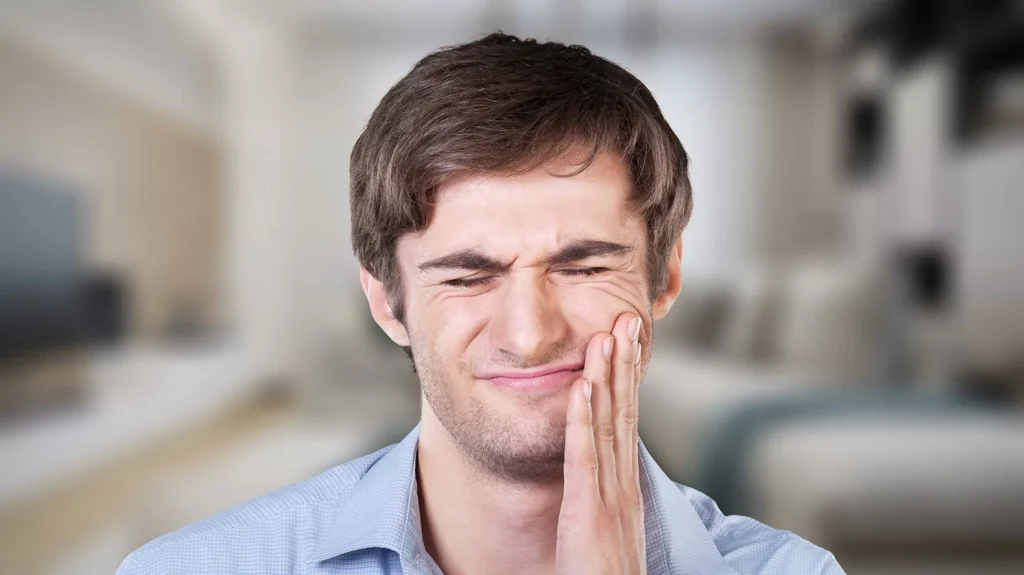
The Muscle Connection: How Your Jaw Muscles Trigger Head Pain
To understand why jaw problems cause head pain, it helps to know a little anatomy. Two of the major muscles involved in chewing and jaw movement — the masseter and the temporalis — sit directly beside and above your ear, with the temporalis fanning out across the side of your skull, right at your temple.
When these muscles are overworked from clenching, grinding, or joint dysfunction, they don’t stay quiet. A 2025 cross-sectional study on TMD patients found that the masseter and temporalis were the most frequently affected muscles, involved in 68.4% and 65.8% of cases, respectively, with the deeper medial and lateral pterygoid muscles also commonly involved. When the temporalis muscle is chronically tense, that tension is felt exactly where people describe their headache pain: the temples, the sides of the head, and behind the eyes.
This is why a jaw problem doesn’t always announce itself as a jaw problem. It shows up disguised as a headache.
Just How Common Is the TMJ-Headache Link?
If you’ve never connected your headaches to your jaw before, the research might surprise you:
- A systematic review and meta-analysis found that roughly 61.6% of people with TMD experience headaches, and the connection runs both ways—nearly 59.4% of people with chronic headaches also show signs of TMD.
- Migraine is the headache type most strongly linked to TMJ disorder. Among people with painful TMD specifically, headache prevalence climbs even higher, with some studies reporting rates above 80%.
- One clinical review found that in TMD specialty clinics, 70% of patients report headaches—most often tension-type, though migraine is common too.
- Nationally, TMJ disorder itself is far from rare. The National Institute of Dental and Craniofacial Research (NIDCR) reports that TMJ disorder affects 5% to 12% of the population, is at least twice as common in women as men, and — unusually for a chronic pain condition — tends to be more prevalent in younger adults.
Put simply: if you have unexplained, recurring headaches, checking your jaw isn’t a stretch. Statistically, it’s one of the more likely explanations.
Signs Your Headaches Might Be Jaw-Related
TMJ-related headaches often get misdiagnosed as tension headaches, migraines, sinus pressure, or even eye strain, because the pain shows up in the head rather than the jaw. A few clues can help separate the two:
- Headaches that are worse in the morning, right after waking
- Pain concentrated at the temples, the sides of the head, or behind the eyes
- A history of jaw clicking, popping, or a jaw that feels tight or “stuck”
- Soreness in the jaw, face, or neck that seems to accompany the headache
- Earaches or ear ringing without any signs of an ear infection
- Headaches that seem to worsen with chewing, yawning, or talking for long periods
- Waking up with a sore jaw or noticing you’ve been clenching your teeth
None of these symptoms on their own confirms TMJ disorder. But together, especially if they show up as a pattern, they’re worth having evaluated by a dentist trained to look at the whole picture, not just the headache.
Why This Connection Gets Missed So Often
Most people bring headaches to their doctor, not their dentist—and that’s a reasonable instinct. But general physicians aren’t always trained to examine jaw function, bite alignment, or muscle tension in the face and temples the way a dentist is. Patients can end up cycling through medications, imaging, or specialists for months without anyone examining the joint that may be driving the pain in the first place.
This is exactly the kind of gap Dr. Markogiannakis and the team at Smiles of Chevy Chase are trained to close. A thorough evaluation of jaw function, muscle tenderness, and bite alignment is often the missing step between “unexplained headaches” and an actual answer.
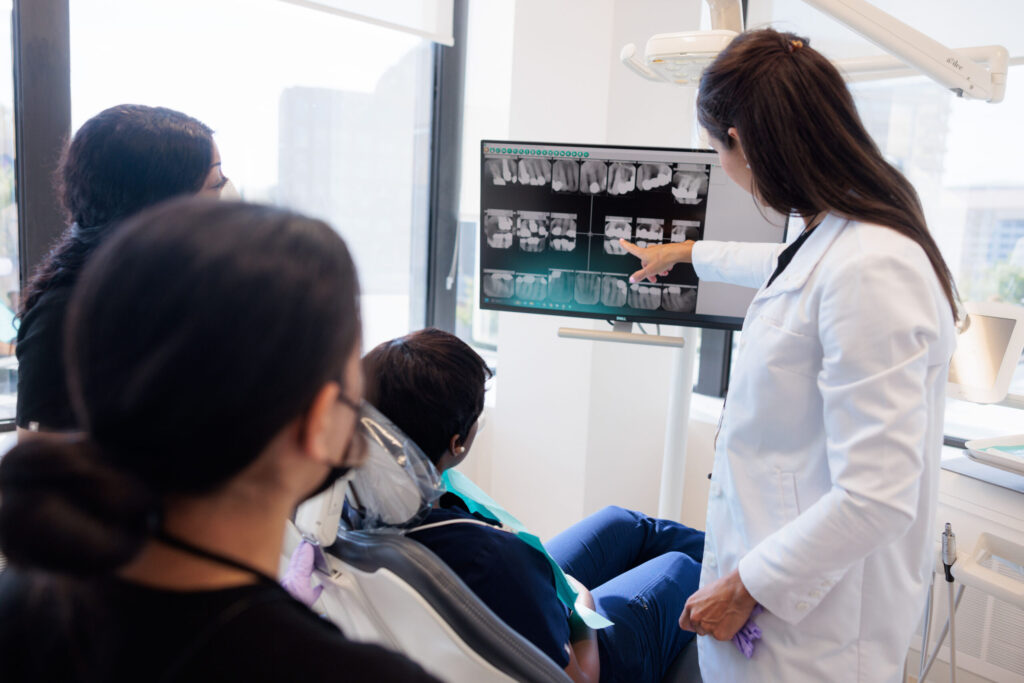
How Dr. Markogiannakis Diagnoses a TMJ-Related Headache
If TMJ disorder is suspected, the evaluation at Smiles of Chevy Chase starts with a detailed conversation and hands-on exam, not assumptions. Dr. Markogiannakis will typically:
- Review your headache history, including when they occur, how long they last, and what seems to trigger them
- Ask about jaw habits like clenching, grinding, or nail-biting, and any history of jaw injury
- Examine jaw movement and range of motion, and listen for clicking or popping
- Palpate the jaw, temple, and facial muscles to check for tenderness or tightness
- Assess your bite alignment, since an uneven bite can force jaw muscles to overcompensate
- Recommend diagnostic imaging, X-rays, a CT scan, or an MRI, if a closer look at the joint structure is needed
This full picture allows Dr. Markogiannakis to determine whether your headaches are connected to TMJ disorder and, if so, what’s driving it, before recommending treatment.
Treatment Options That Address the Root Cause
The goal of TMJ therapy isn’t to mask headache pain—it’s to reduce the muscle tension and joint strain causing it in the first place. Most patients start with non-invasive TMJ treatment:
- Custom oral appliance therapy: A properly fitted night guard or splint reduces clenching and grinding overnight and helps the jaw rest in a more comfortable position, easing pressure on the temporalis and masseter muscles.
- Lifestyle and dietary adjustments: Softer foods, smaller bites, and avoiding excessive gum chewing or wide jaw movements give overworked jaw muscles a chance to calm down.
- Physical therapy: Targeted exercises can stretch and strengthen jaw muscles, improve joint mobility, and correct posture patterns that contribute to tension.
- Stress management: Since clenching is frequently a stress response, addressing the underlying stress can meaningfully reduce both jaw tension and headache frequency.
- Bite correction: If misalignment is contributing to muscle strain, options like Invisalign may be part of a longer-term plan.
For patients who don’t find enough relief with conservative care, more advanced options—including Botox injections for overactive jaw muscles or arthrocentesis—may be discussed. Every plan starts with the least invasive option that fits your diagnosis.
When to See a TMJ Dentist in Chevy Chase, MD
You don’t need to wait until the pain becomes severe or constant to get evaluated. If you’ve been dealing with recurring headaches that haven’t responded to typical treatment, and you also notice jaw tightness, clicking, or morning soreness, it’s worth having your jaw checked as part of the picture—not just your head.
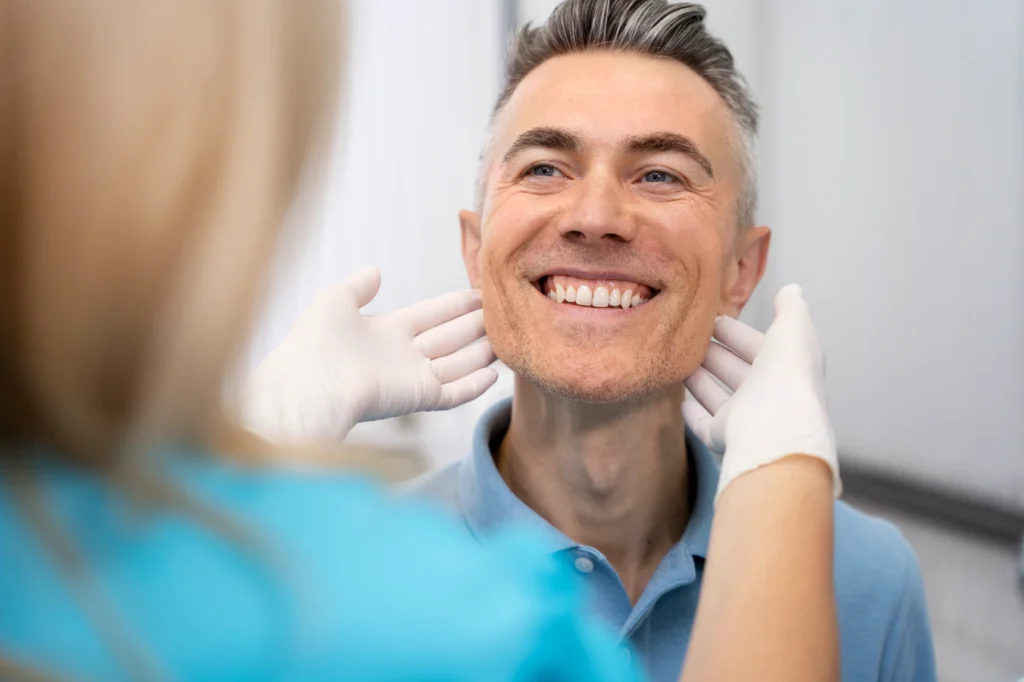
Find Relief From Headaches at the Source. Schedule Your TMJ Evaluation Today!
If your headaches keep coming back without a clear cause, your jaw may be the missing piece. Dr. Despina Markogiannakis and the team at Smiles of Chevy Chase will take the time to evaluate your jaw function, muscle tension, and bite alignment and build a personalized TMJ therapy plan aimed at relieving pain at its source, not just managing symptoms.
We welcome patients from Chevy Chase, Bethesda, Rockville, and Silver Spring, MD. Contact our Chevy Chase office at (301) 652-0656 or visit us at 5454 Wisconsin Ave, Suite 810, Chevy Chase, MD 20815 to schedule your consultation.
