

Your Crown Was Built to Last — But Not Forever
Dental crowns are one of the most versatile restorations in dentistry. They protect cracked teeth, anchor bridges, restore teeth after root canals, and give patients a complete, functional smile after significant decay. A well-placed crown can serve you faithfully for a decade or longer, but no crown lasts forever.
If you have a crown that was placed more than ten years ago, or one that was made from older materials like porcelain-fused-to-metal (PFM), it may be time for an honest evaluation. At Smiles of Chevy Chase, Dr. Despina Markogiannakis regularly sees patients who have been living with a failing or outdated crown without realizing it—and in many cases, the solution is simpler and more rewarding than they expected.
Our Chevy Chase dentist outlines the five most common signs that indicate your crown may need to be replaced. Additionally, she explains why IPS e.max® lithium disilicate is the preferred material for crown replacements today and clarifies what this upgrade entails in practice.

Sign #1: You Notice a Dark Line at the Gumline
This is one of the most recognizable signs of an aging crown—and one of the most cosmetically frustrating. If you see a dark gray or black line running along the gum where your crown meets the tooth, you’re likely looking at the metal substructure of a porcelain-fused-to-metal crown. Over time, as gum tissue naturally recedes even slightly, that metal collar becomes visible.
Beyond aesthetics, this dark margin often signals that the seal between the crown and tooth has begun to break down. When that seal weakens, bacteria can infiltrate the margin and begin the process of secondary decay underneath the restoration—often without causing obvious symptoms until the damage is more extensive.
Porcelain-fused-to-metal crowns were the industry standard for decades, and many patients received them during routine care in the 1990s and 2000s. At that time, they were a significant improvement over full metal restorations. But materials science has advanced considerably since then. All-ceramic crowns like IPS e.max® have no metal substructure at all, which means no dark margin—now or in the future, regardless of any gum changes.
If you’re seeing this line and are not sure whether it’s cosmetic or clinical, Dr. Markogiannakis can assess the margin integrity and help you understand your options. A new crown is not always immediately necessary, but catching a compromised margin early is always better than waiting.
Sign #2: You Are Experiencing Sensitivity or Pain Under the Crown
A properly fitted crown should feel comfortable and inert. You should not feel it when you drink something cold, eat something sweet, or press on the tooth. If you have begun noticing sensitivity—especially sensitivity that was not present when the crown was first placed—that is worth paying attention to.
Sensitivity under a crown typically points to one of several issues.
- The crown may have developed a micro-crack that’s allowing thermal or pressure stimuli to reach the nerve. The cement seal may have degraded, leaving a small gap where bacteria and fluids can penetrate.
- In some cases, the underlying tooth itself has developed secondary decay beneath the restoration.
- And in others, the tooth’s pulp (the inner nerve tissue) has become inflamed or infected, which can happen years after a crown is placed, particularly in teeth that have undergone significant trauma or previous dental work.
It’s worth noting that sensitivity alone doesn’t always mean the crown needs to be fully replaced. Sometimes a root canal followed by a new crown is the appropriate path; other times, the crown can be reseated or the tooth monitored. What matters is that sensitivity should never be dismissed or managed with over-the-counter pain relief indefinitely. It’s your body’s signal that something beneath the surface needs attention.
At Smiles of Chevy Chase, Dr. Markogiannakis uses digital X-rays and a thorough clinical exam to distinguish between structural crown failure, secondary decay, and pulpal involvement—so you get an accurate diagnosis rather than a premature recommendation.
Sign #3: Your Crown Is Chipped, Cracked, or Visibly Worn
Older all-ceramic crowns, particularly those made from feldspathic porcelain or earlier-generation ceramics, are more prone to chipping and surface wear than modern lithium disilicate. If your crown has developed a visible chip along its biting edge, a crack you can see or feel with your tongue, or has become noticeably flattened and worn compared to its original contour, it’s no longer functioning as intended.
Chipping and cracking are especially common in patients who grind or clench their teeth (bruxism), even mild or unconscious nighttime grinding. The forces generated during grinding can far exceed normal bite forces, and older ceramic materials simply were not engineered to withstand them over the long term.
Wear is also a concern beyond just the crown itself. A worn crown changes the bite geometry, which can place excess stress on neighboring teeth and the jaw joint. Patients with heavily worn crowns sometimes develop TMJ discomfort, headaches, or excessive wear on opposing teeth—all of which can be traced back to a crown that is no longer functioning in proper occlusion.
IPS e.max® lithium disilicate has a flexural strength of approximately 400 MPa, making it significantly more resistant to chipping and fracture than older feldspathic porcelain. For patients with bruxism, Dr. Markogiannakis may also recommend a custom night guard to protect the restoration and extend its clinical lifespan.
Clinical research published in PubMed, following e.max restorations over 14 years, found a bulk fracture rate low enough to yield an overall annual failure rate of just 0.1%—a level of durability that older ceramics simply cannot match.
Sign #4: Your Crown No Longer Fits — and You Can Feel It
Crowns do not change shape over time, but the mouth around them does. Gum tissue recedes, neighboring teeth shift, and the natural bone structure of the jaw can change over the years—all of which can alter how a crown fits and feels within the bite. If your crown feels high, rocks slightly, or if you notice food consistently catching around it, the fit may have been compromised.
A crown that no longer fits properly creates two categories of problems.
- The first is mechanical: A high bite point places disproportionate stress on the crowned tooth and the opposing tooth, potentially leading to soreness, fracture risk, and accelerated wear.
- The second is biological: Gaps at the crown margin become traps for food debris and bacteria, creating ideal conditions for gum disease and secondary decay.
Patients sometimes describe this as the crown feeling “loose”—and while a crown that truly moves when you push on it is an emergency situation requiring same-day evaluation, the subtler version of poor fit is worth addressing proactively as well. If your dental hygienist has mentioned difficulty cleaning around a specific crown, or if you’re using floss threaders around a crown that seemed straightforward before, those are early indicators of a fit issue worth evaluating.
When replacing a crown with IPS e.max\u00ae, Dr. Markogiannakis uses digital impressions rather than traditional putty trays to capture the precise geometry of the prepared tooth. This level of accuracy produces a restoration with tighter margins and a more predictable long-term seal—addressing the fit problem at its root.
Sign #5: Your Crown Simply Does Not Match Your Smile Anymore
This may seem like a purely aesthetic concern, but it is a legitimate clinical and quality-of-life consideration. Crowns placed decades ago were limited by the shade-matching and translucency capabilities of the materials available at the time. Older PFM crowns in particular often appear flat and opaque compared to natural tooth enamel, which has layered translucency and a slight internal luminosity that older ceramics could not replicate.
Over time, older crowns can also stain and discolor in ways that natural teeth and newer ceramics do not. If you have whitened your natural teeth or have made other cosmetic improvements to your smile, a visibly mismatched crown becomes even more apparent. Patients who are preparing for a special event, a professional change, or simply want to feel more confident in photos and in person often find that an outdated crown is the last piece of the puzzle.
IPS e.max® lithium disilicate is formulated to mimic the optical behavior of natural enamel. Its controlled translucency allows it to interact with light the way a real tooth does, producing a restoration that blends seamlessly into the smile even under scrutiny. The material is also available in multiple translucency levels and a full range of shades, allowing Dr. Markogiannakis to customize the final restoration to match the specific character of your surrounding dentition.
Because the Smiles of Chevy Chase team takes smile aesthetics seriously, the shade selection process is thorough. The goal is not just a crown that looks “good enough”—it’s a crown that you genuinely can’t pick out of your smile in a photograph.
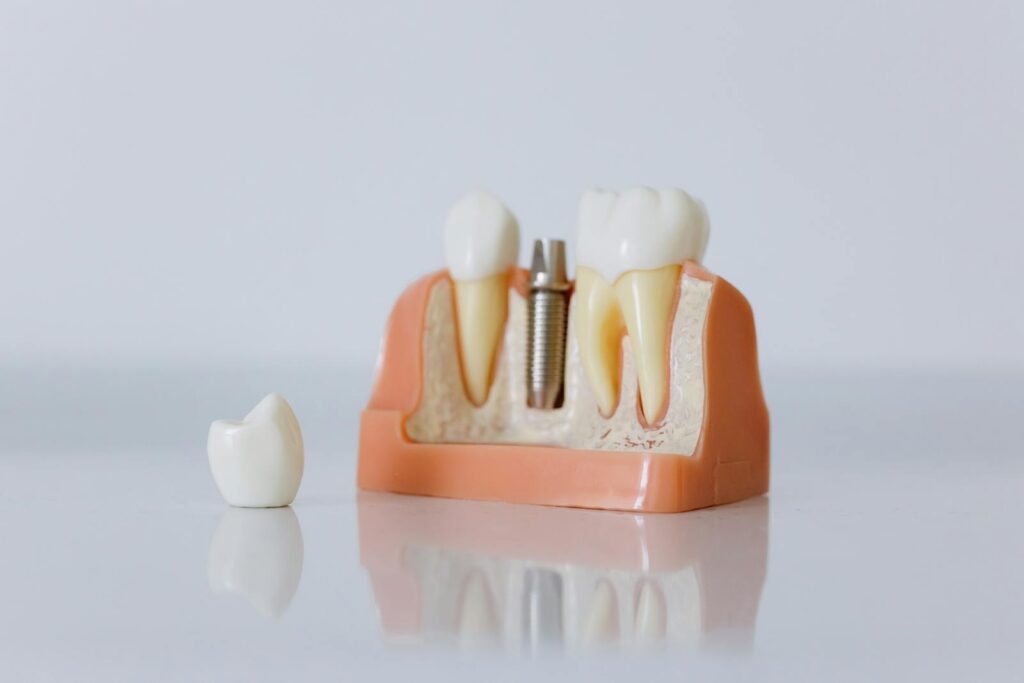
Why E-Max Is the Upgrade Worth Getting
Not all crown materials are created equal, and the field has advanced significantly over the past decade. IPS e.max® (manufactured by Ivoclar Vivadent) is a lithium disilicate glass-ceramic that has emerged as the preferred material for single-unit crowns in aesthetic zones and increasingly for posterior restorations as well. Here is what the evidence shows:
- Clinical Survival: A 14-year prospective study published in the Journal of Prosthetic Dentistry followed pressed e.max restorations in patients with severe tooth wear—one of the most demanding use cases—and found an overall annual failure rate of just 0.1%, with a cumulative survival rate of 98.6%. Anterior crowns had zero failures over the entire study period.
- Metal-Free and Biocompatible: E.max® contains no metal, which eliminates the dark margin problem and makes it an excellent choice for patients with metal sensitivities or those who prefer a fully biocompatible restoration. The ceramic material is well-tolerated by gum tissue and does not contribute to the inflammation or recession sometimes associated with older metal-based restorations.
- Conservative Tooth Preparation: Because lithium disilicate is strong enough to function in thinner sections than older ceramics, it requires less removal of healthy tooth structure to achieve proper thickness. The conservation of natural teeth is a fundamental principle of modern restorative dentistry.
- Outstanding Aesthetics: The translucency and shade range of IPS e.max® allow it to blend with natural dentition in a way that older ceramics and metal-based crowns cannot match. A retrospective study from LMU University Hospital Munich found high patient satisfaction in both aesthetics and function across nearly 6 years of clinical service.
- Proven Long-Term Track Record: A systematic review published in the Journal of Prosthetic Dentistry analyzing clinical outcomes across 12 studies found the 5-year cumulative survival rate for lithium disilicate single crowns to be 97.8%, rising to 96.7% at 10 years—data that reflects consistent, real-world clinical performance.
What the Crown Replacement Process Looks Like at Smiles of Chevy Chase
Replacing an existing crown is generally a straightforward process, and many patients are surprised by how much more comfortable the experience is today compared to when their original crown was placed.
At your consultation, Dr. Markogiannakis will evaluate the existing crown, take digital X-rays to assess the underlying tooth and bone, and discuss your goals for both function and aesthetics. If replacement is recommended, the appointment involves removing the old crown, preparing the tooth surface to receive the new restoration, taking precise digital impressions, and placing a temporary crown while your permanent IPS e.max® restoration is fabricated.
For patients who feel anxious about dental procedures, Smiles of Chevy Chase offers The Wand computer-controlled anesthesia system, which delivers local anesthetic slowly and precisely, significantly reducing the discomfort associated with the injection itself. Nitrous oxide sedation is also available for patients who benefit from additional relaxation.
The final crown is typically placed at a second appointment, at which point Dr. Markogiannakis will verify fit, check the bite, and make any necessary refinements before permanently cementing the restoration. Most patients leave the appointment comfortably and resume normal activity the same day.
Schedule Your Consultation for a Natural-Looking Smile
Mid-year is an ideal time to act on dental work you have been putting off. Many patients still have unused benefits remaining on their dental insurance plans, and scheduling now allows you to complete your treatment comfortably before fall schedules fill up.
If any of the five signs in this guide sound familiar—a dark gumline, sensitivity, visible damage, bite changes, or a crown that simply does not match your smile anymore—a consultation with Dr. Despina Markogiannakis can give you a clear picture of what is happening and what your best options are.
Contact us at (301) 652-0656 to book your E-Max crown consultation at Smiles of Chevy Chase. Dr. Despina Markogiannakis’s Chevy Chase dental office is located at 5454 Wisconsin Ave, Suite 810, Chevy Chase, MD 20815. We welcome patients from Chevy Chase, Bethesda, Rockville, and Silver Spring, MD.
