

A Fresh Season Is the Perfect Time to Check on Your Gum Health
Spring in the D.C. area has a way of making everything feel like a fresh start. The cherry blossoms have had their moment, the weekend farmers’ markets are back, and Chevy Chase sidewalks are full of people who look like they haven’t left their homes in months. There’s an energy to mid-April that makes people want to clean things up—closets, gardens, routines.
But here’s one thing most people don’t think to put on their spring checklist: their gum health.
Gum disease is one of the most widespread and underdiagnosed chronic conditions in the country. It progresses silently — often without pain — until it causes irreversible damage to the tissue and bone supporting your teeth. And while it can strike anyone at any age, it tends to be caught late precisely because people don’t know what to look for.
At Smiles of Chevy Chase, Dr. Despina Markogiannakis sees this every spring: patients who come in for a routine cleaning and discover that their gums are in worse shape than they realized. The good news? When caught early enough, gum disease is very treatable—and one of the most effective tools available today is ARESTIN®. This locally applied antibiotic targets the source of the infection directly.
This spring, let’s talk about what gum disease looks like, why it matters more than most people think, and how ARESTIN® treatment at our Chevy Chase dental practice can help you protect your smile for the long term.
Call our Chevy Chase dental office at (301) 652-2939 to schedule your dental appointment. Smiles of Chevy Chase welcomes patients from Chevy Chase, Bethesda, Rockville, and Silver Spring, MD.
The Numbers Behind Gum Disease — And Why They Should Concern You
Gum disease isn’t a fringe condition. It’s one of the most common chronic diseases in the United States, affecting hundreds of millions of people around the world. Despite its prevalence, it often goes untreated because it rarely causes pain in its early stages—and many people simply don’t know they have it. That means roughly half of your neighbors, coworkers, and family members are walking around with some degree of gum disease—and a significant portion of them don’t know it.
Gum disease also doesn’t stay in the mouth. Research has established strong links between untreated periodontal disease and many serious systemic health conditions, including:
- Heart disease and increased risk of heart attack or stroke
- Type 2 diabetes (and difficulty controlling blood sugar in those already diagnosed)
- Respiratory infections and complications
- Adverse pregnancy outcomes, including preterm birth and low birth weight
- Cognitive decline and Alzheimer’s disease (emerging research)
The bacteria responsible for gum disease, including Porphyromonas gingivalis and Tannerella forsythia, can enter the bloodstream through inflamed gum tissue and trigger inflammatory responses throughout the body. This is why periodontitis is increasingly viewed as a whole-body health issue, not just a dental one.
If you haven’t had a periodontal evaluation recently, spring is an excellent time to schedule one. Early detection makes an enormous difference in outcomes.
What Gum Disease Actually Looks Like: Signs You Shouldn’t Ignore
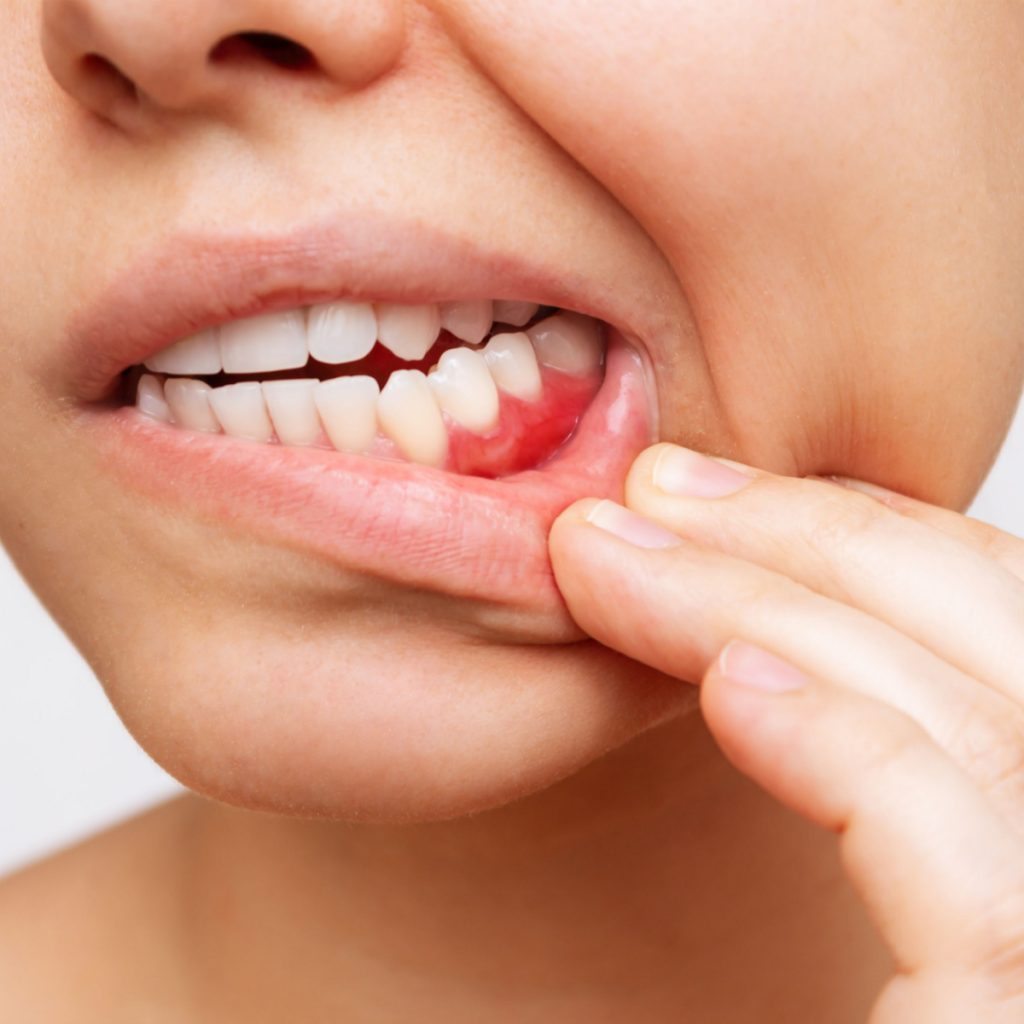
One of the reasons gum disease is so underdiagnosed is that its early warning signs are easy to dismiss or explain away. Many patients assume that a little bleeding when they brush is normal or that bad breath is just a diet issue. In reality, these symptoms are often your gums sending a distress signal.
Dr. Markogiannakis recommends scheduling a periodontal evaluation if you notice any of the following:
- Bleeding gums, especially during brushing, flossing, or eating
- Gums that are red, puffy, swollen, or tender to the touch
- Persistent bad breath or a bad taste in your mouth that doesn’t resolve with brushing
- Receding gums, teeth that appear longer than they used to
- Loose, shifting, or separating teeth
- Changes in the way your teeth fit together when you bite
- Gum pockets measuring 5 mm or deeper (measured during a dental exam)
It’s worth noting that these signs don’t all appear at once, and some patients with significant periodontal disease have very few noticeable symptoms at all. That’s what makes regular professional evaluation so important: your hygienist can measure gum pocket depth and identify areas of concern that simply aren’t visible to the naked eye.
Gum disease progresses through stages: starting with gingivitis (reversible inflammation of the gums) and advancing to periodontitis, where the infection begins destroying the bone and connective tissue that hold your teeth in place. Once bone loss occurs, it cannot be fully reversed—which is why early and aggressive treatment matters.
Why Deep Cleaning Alone Sometimes Isn’t Enough
Scaling and root planing (SRP), commonly called a “deep cleaning,” is the cornerstone of non-surgical gum disease treatment. During this procedure, a dental hygienist carefully removes plaque and tartar from below the gumline and smooths the root surfaces to discourage bacterial reattachment.
SRP is highly effective, and for many patients, it’s all that’s needed to bring gum disease under control. But for others, particularly those with pockets that are 5 mm or deeper, bacteria can remain in areas of the pocket that instruments can’t fully reach. When this happens, the infection can persist or return—even after a thorough cleaning.
This is exactly the problem that ARESTIN® was designed to solve.
ARESTIN® (minocycline hydrochloride microspheres, 1 mg) is the only FDA-approved locally applied antibiotic used alongside SRP for the treatment of adult periodontitis. Rather than taking an antibiotic pill—which must travel through your entire bloodstream before reaching the infection—ARESTIN® is placed directly into the infected gum pocket immediately after your deep cleaning.
The treatment works through a sophisticated sustained-release microsphere delivery system. Each microsphere is made from a biodegradable polymer (PLGA) that gradually dissolves inside the pocket, releasing minocycline—a broad-spectrum antibiotic—in controlled concentrations over time.
In practical terms, that means ARESTIN® keeps working on your gum infection long after you leave the dental chair—providing continuous antibiotic activity at the exact site where it’s needed most. There’s nothing to remove afterward; the microspheres biodegrade completely on their own within about 30 days.
Why Local Delivery of ARESTIN® Outperforms Oral Antibiotics
Some patients wonder why their dentist would recommend ARESTIN® when they could just take an antibiotic pill. It’s a fair question—and the answer comes down to concentration, targeting, and safety.
When you take an oral antibiotic, it circulates through your entire body before arriving at the gum pocket. By the time it gets there, the concentration at the actual infection site is a fraction of what it started as — often too low to be bactericidal in the complex environment of a periodontal pocket.
This targeted approach also reduces the risk of contributing to antibiotic resistance—a growing public health concern. When antibiotics travel systemically, they interact with bacteria throughout your entire body, increasing the chance that resistant strains develop over time. ARESTIN® minimizes that risk by concentrating its effect exactly where you need it.
The clinical evidence is compelling as well. Clinical trial data showed that patients treated with ARESTIN® plus SRP had statistically significantly reduced probing pocket depths compared to those who received SRP alone, and those results were maintained at nine months post-treatment (p < 0.01). Additional research confirms that ARESTIN® provides superior results compared to SRP alone for up to 90 days following a single application.
What to Expect During ARESTIN® Treatment at Smiles of Chevy Chase
One of the things patients appreciate most about ARESTIN® is how straightforward the treatment experience is. There’s no separate visit required, no cutting, no sutures, and very little downtime.
Step 1: Scaling and Root Planing
Your hygienist performs a thorough deep cleaning of all affected areas, removing plaque and tartar from below the gumline and smoothing root surfaces. Getting the pocket as clean as possible before ARESTIN® placement is critical—the antibiotic works best when it’s working on a freshly cleaned surface.
Step 2: ARESTIN® Placement
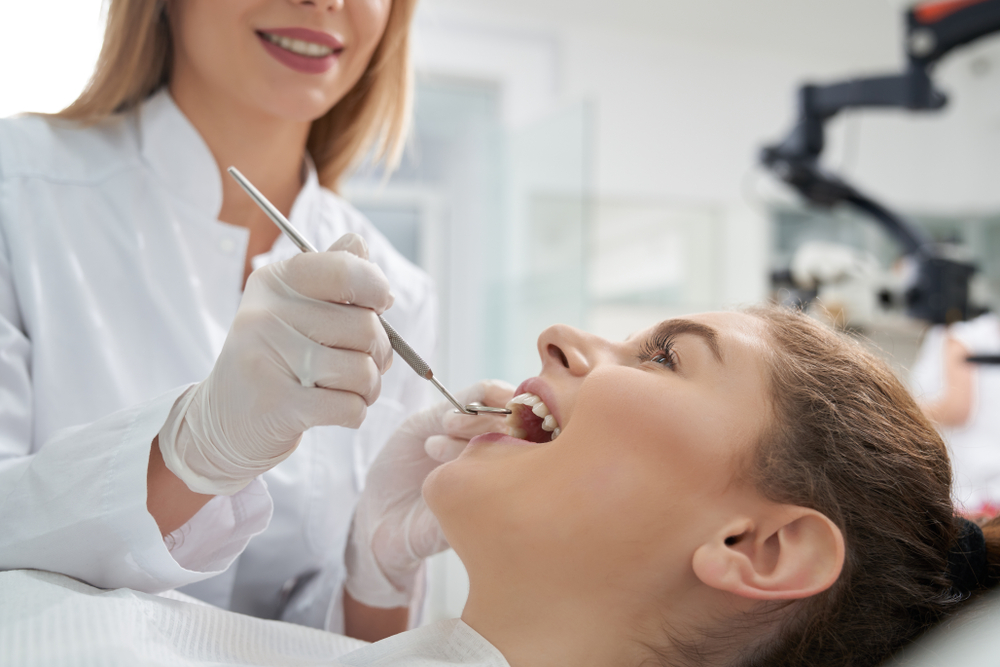
Using a small, disposable cartridge, your hygienist places ARESTIN® powder directly into each infected gum pocket. The process is typically painless and does not require a local anesthetic injection, though a topical numbing gel can be used if you prefer. Most patients find the procedure entirely comfortable.
Step 3: Biodegradation—No Removal Needed
That’s it. The microspheres begin releasing minocycline immediately and biodegrade naturally within approximately 30 days. There’s no removal procedure, no sutures to take out, and no follow-up specifically for the ARESTIN® placement.
Aftercare Instructions
After treatment, our team will advise you to avoid touching or probing the treated area, skip hard or sticky foods for a few days, avoid flossing the treated pockets for 10 days, and steer clear of alcohol-based mouthwash immediately post-treatment. Most patients return to their normal routine the same day.
Who Is a Candidate for ARESTIN® at Our Chevy Chase Practice?
ARESTIN® is most effective for adults with mild to moderate periodontitis. You may be a good candidate if you:
- Have gum pockets measuring 5 mm or deeper after scaling and root planing
- Are in a periodontal maintenance program and experiencing pocket recurrence
- Have been diagnosed with initial or moderate periodontitis (not just gingivitis)
- Want to avoid or delay surgical intervention
ARESTIN® is not appropriate for children and teenagers (tetracycline-class drugs can affect developing teeth), pregnant or nursing women, or patients with known allergies to minocycline or any tetracycline antibiotic. Dr. Markogiannakis reviews your complete health history before making any treatment recommendation.
ARESTIN® has been in continuous clinical use for over 25 years and is supported by extensive peer-reviewed evidence — making it one of the most well-studied locally applied antibiotics in periodontal care.
Mid-April Is an Ideal Time to Act—Here’s Why
Spring is one of the most natural times to address dental health concerns that have been put off through the busy holiday season and winter months. The timing is also practical: many patients have met their insurance deductibles for the year and are ready to make use of benefits before they reset. If ARESTIN® is covered under your dental plan—which it often is when combined with SRP as part of a medically necessary periodontal treatment—now is the time to take advantage of it.
Additionally, if summer travel, outdoor activities, and social events are on your calendar, this is the right moment to address gum disease before your schedule gets packed. Getting your periodontal health under control now means you can head into summer with a healthier, more confident smile without an untreated infection silently getting worse.
Dr. Markogiannakis and the team at Smiles of Chevy Chase are currently welcoming new and returning patients for periodontal evaluations. If you’ve been told your gum pockets are too deep, or if you simply haven’t had a gum evaluation in a while, this is your sign.
Insurance Coverage and Payment Options
Many dental insurance plans provide partial or full coverage for ARESTIN® when it is used alongside scaling and root planing as part of a medically necessary periodontal treatment plan. Our front desk team at Smiles of Chevy Chase handles insurance verification directly — we contact your provider before your appointment so there are no billing surprises.
For patients without dental insurance or with out-of-pocket costs, we accept multiple payment methods and can help connect you with low-interest financing options through CareCredit. Our goal is to make sure cost is never a barrier to getting the periodontal care you need.

Ready to Give Your Gums the Attention They Deserve This Spring? Contact Smiles of Chevy Chase Today!
Gum disease doesn’t get better on its own, but with the right treatment, it absolutely can be managed. If you’re experiencing any signs of gum disease, have been told your pockets are too deep after a deep cleaning, or simply haven’t had a periodontal evaluation in a while, now is the perfect time to take action.
Dr. Despina Markogiannakis and the team at Smiles of Chevy Chase are here to help you get ahead of gum disease this spring with personalized care; the latest in periodontal treatment, including ARESTIN®, and the kind of clinical excellence that has earned us recognition as a top practice by Washingtonian, Bethesda, and Potomac Magazines.
Call us at (301) 652-0656 to schedule your consultation with our Chevy Chase dentist. We welcome patients from Chevy Chase, Bethesda, Rockville, Silver Spring, and the greater Washington, D.C. area. Smiles of Chevy Chase is located at 5454 Wisconsin Ave, Suite 810, Chevy Chase, MD 20815.
